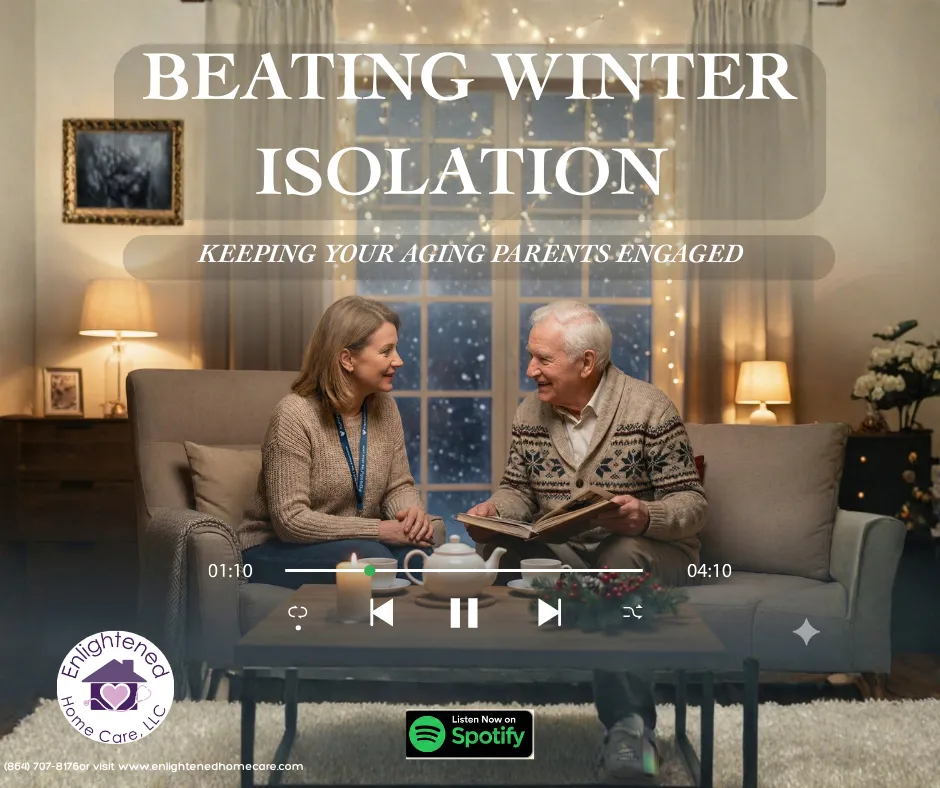
Beating Winter Isolation: Keeping Your Aging Parents Engaged

Beating Winter Isolation: Keeping Your Aging Parents Engaged
Winter in the Upstate brings shorter days, colder temperatures, and for many of our aging parents, an increased risk of something far more dangerous than the weather: isolation. As the thermometer drops and the sun sets earlier, seniors often retreat indoors, and what begins as a practical response to winter conditions can quickly spiral into loneliness, depression, and declining health.
If you've noticed your aging parent becoming more withdrawn, skipping their usual activities, or seeming less engaged during your phone calls, you're not imagining it. Winter isolation is real, and in our Upstate SC communities—from Simpsonville to Greenville, Greer to Travelers Rest—it affects more families than most people realize.
Why Winter Isolation Hits Seniors Harder
Dr. Atul Gawande, author of Being Mortal, reminds us that quality of life for aging adults isn't just about safety and medical care—it's about autonomy, purpose, and connection. When winter keeps our parents indoors, they lose more than just their daily walk around the neighborhood. They lose the casual conversations at the grocery store, the weekly coffee date with friends, and the sense of purpose that comes from being part of a community.
The risks go beyond loneliness. Research from the National Council on Aging shows that social isolation in seniors is linked to increased rates of depression, cognitive decline, and even mortality rates comparable to smoking 15 cigarettes a day. In other words, isolation isn't just an emotional issue—it's a serious health concern.
The Warning Signs You Shouldn't Ignore
How do you know if your parent is sliding into winter isolation? Watch for these red flags:
Changes in routine: They've stopped attending church services, book club meetings, or their weekly trip to the Greenville Library System. Activities they once prioritized suddenly feel "too much trouble."
Neglecting self-care: You notice they're wearing the same clothes multiple days in a row, skipping showers, or the house seems more cluttered than usual. As dementia expert Teepa Snow teaches, these behavioral changes often signal that someone is losing their connection to daily rhythms and social motivation.
Increased sleeping or TV watching: If your parent is suddenly napping three times a day or can recite the full schedule of every Hallmark movie, they may be using sleep and passive entertainment to fill the void left by meaningful engagement.
Mood changes: Irritability, sadness, or a "what's the point?" attitude that wasn't there before. Geriatrician Louise Aronson, author of Elderhood, emphasizes that we often mistake depression in older adults as "just getting old" when it's actually a treatable response to circumstances like isolation.
Practical Strategies for the Upstate Winter
The good news? There are concrete steps you can take to keep your aging parent engaged, even when February feels endless.
1. Bring the Community Indoors
Just because your parent can't get out as easily doesn't mean the world can't come to them. Consider these local options:
Technology connection: Set up regular video calls with grandchildren, friends, or even a virtual book club. The Greenville County Library offers online programs specifically for seniors. A simple tablet with large icons can bridge the distance.
In-home companionship: Professional non-medical home care isn't just about tasks—it's about engagement. At Enlightened Home Care here in Simpsonville, trained caregivers provide the kind of meaningful interaction that combats isolation: conversation over coffee, working on puzzles together, reminiscing over old photos, or simply being present.
Meal delivery as social connection: Programs like Meals on Wheels of Greenville County deliver more than food—volunteers provide a friendly face and a wellness check. That daily interaction can be a lifeline.
2. Create Winter-Friendly Social Outings
Not every winter day is prohibitive. On milder days, take advantage:
Coffee shop culture: Downtown Simpsonville, Travelers Rest, and Main Street Greenville all have cozy cafes where you can meet for a warm drink and people-watching. The key is regularity—make it a standing Tuesday date.
Indoor walking: Haywood Mall opens early for mall walkers, providing a climate-controlled environment with built-in social opportunities. The Kroc Center and local YMCAs also offer senior programs and warm indoor spaces.
Faith communities: Many Upstate churches offer midweek services, Bible studies, or senior lunch programs. These provide both spiritual connection and social engagement in accessible locations.
3. Shift to Winter-Appropriate Activities
Help your parent find new ways to stay engaged that actually work in colder months:
Indoor hobbies: Is there a craft or skill they've always wanted to try? Watercolor painting, knitting, puzzles, or genealogy research can provide hours of meaningful engagement. Consider signing them up for a beginner class at the Greenville County Museum of Art or the Greer Cultural Arts Council.
Book clubs and learning: The Simpsonville Library and other Greenville County Library branches offer book discussion groups specifically for seniors. Some even provide transportation assistance.
Volunteering from home: Organizations like RSVP of the Piedmont connect seniors with volunteer opportunities that can sometimes be done from home, like making phone calls for nonprofits or crafting items for charity.
4. Address the Underlying Barriers
Sometimes isolation isn't about motivation—it's about logistics. Be honest about what might really be holding your parent back:
Transportation fears: If they've stopped driving or are nervous about winter roads, that's creating isolation. Services like Greenville Transit Authority's GTA Access or private transportation companies can help, but they require advance planning.
Physical limitations: Maybe they're not going out because stairs are harder, balance is shakier, or arthritis is flaring up in cold weather. Addressing these with their doctor, getting a cane or walker they'll actually use, or arranging for someone to help them safely navigate winter conditions can make all the difference.
Undiagnosed depression or cognitive changes: If you've tried everything and your parent still seems disconnected, it may be time for a medical evaluation. Depression and early cognitive changes are both treatable, but they require professional intervention.
When You Need More Support
As Nancy Mace and Peter Rabins remind us in The 36-Hour Day, caregiving isn't something you have to do alone. If winter isolation has become a pattern, or if you're juggling your own work and family while worrying about a parent across town, professional support can make all the difference.
An Aging Life Care professional or non-medical home care agency can:
Create a personalized engagement plan based on your parent's interests and abilities
Provide regular companionship and structured activities
Monitor for concerning changes and alert you early
Give you peace of mind that someone is checking in regularly
At Enlightened Home Care in Simpsonville, we understand that combating isolation isn't about filling time—it's about maintaining dignity, purpose, and connection. It's about honoring who your parent has always been while supporting who they are now.
The Bottom Line
Winter won't last forever, but the impact of prolonged isolation can. The strategies that work best are the ones that recognize what Dr. Gawande calls the fundamental human need for autonomy and purpose. Your parent doesn't need you to solve everything or create the perfect schedule—they need consistent connection, adapted activities, and the message that they still matter.
This winter, pay attention. Make the call. Show up for coffee. Arrange for help when you can't be there. Because beating winter isolation isn't just about keeping your aging parent busy—it's about keeping them engaged with life itself.
If you're concerned about isolation for your aging parent in the Upstate SC area, Enlightened Home Care is here to help. Call us at (864) 707-8176 or visit www.enlightenedhomecare.com to learn how our compassionate caregivers can provide the meaningful connection your loved one deserves.
