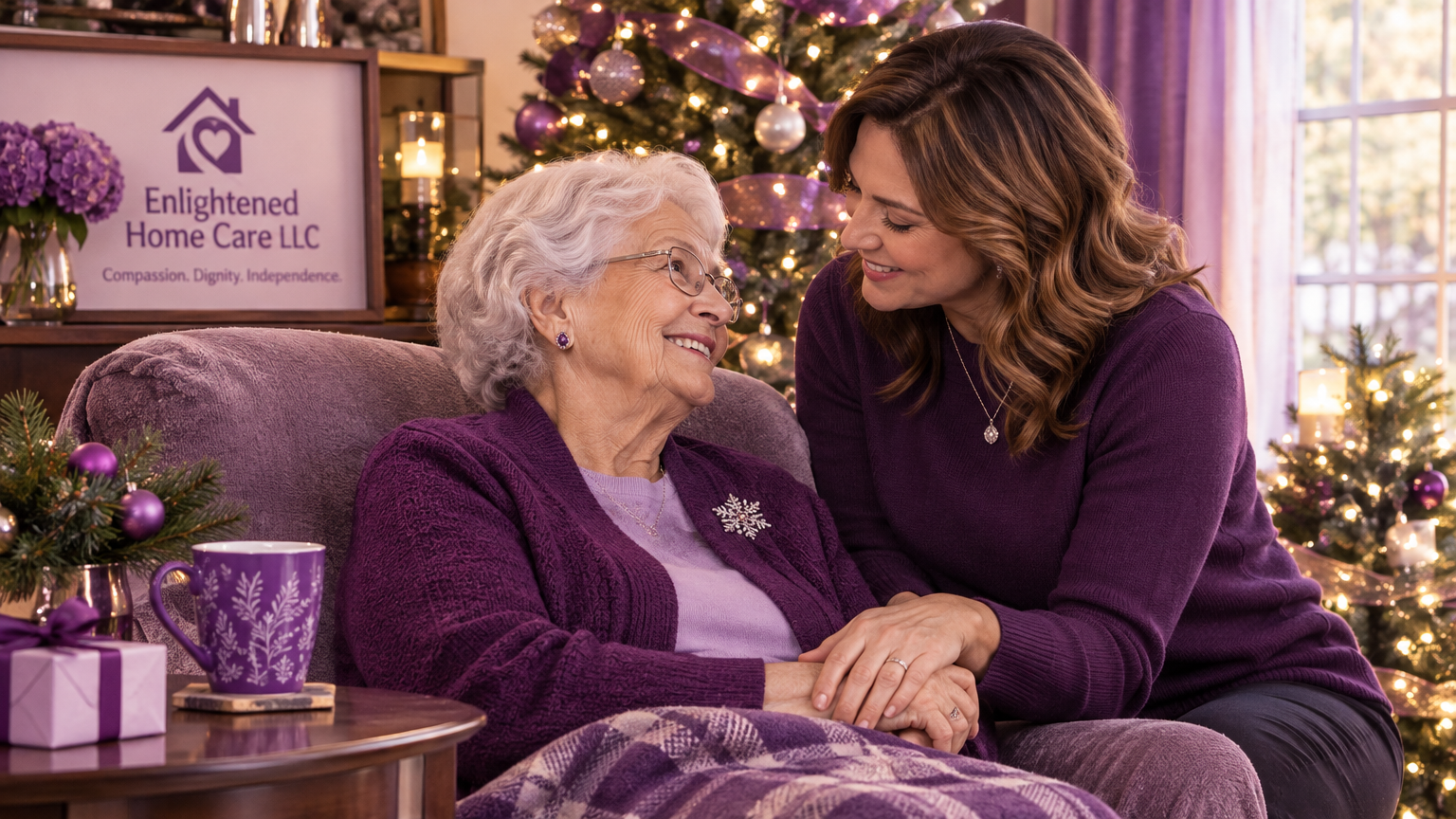
Holiday Visits: What to Notice When You See Aging Parents This Season
Holiday Visits: What to Notice When You See Aging Parents This Season
You drive to Greenville or Simpsonville for Thanksgiving, walk through the front door, and something feels different. The house is quieter than usual. The fridge is nearly empty. Mom seems thinner. Dad moves a little more carefully than you remembered.
Phone calls say "I'm fine." In-person visits tell the truth.
For many families, the holiday season is the first extended stretch of time they spend inside a parent's home all year. That closeness is a gift — and an important opportunity. The signs that something has changed are often right there if you know what to look for. Spotting them now gives your family time to make a plan together, calmly and thoughtfully, rather than scrambling after a fall, a hospitalization, or a crisis.
This guide is for you if you're visiting an aging parent in the Upstate this Thanksgiving or Christmas and you want to look out for them in a way that feels caring, not critical.
Why Holiday Visits Reveal What Phone Calls Can't
Gradual change is easy to miss when you're far away. A parent who has slowly stopped cooking, lost ten pounds, or started repeating themselves will tell you everything is fine — not to worry you, and because to them, it feels fine. The decline happened one small step at a time.
But when you spend two or three days inside their home, you see the full picture: what's in the kitchen, how they move from room to room, whether the mail has piled up, whether they can follow the dinner table conversation. That's information a weekly FaceTime call simply cannot give you.
This is especially true if you're the long-distance adult child who lives out of state while a parent stays in the Upstate. Your holiday visit may be the clearest window you get all year into how they're really doing at home.
8 Areas to Pay Attention to During Your Visit
You don't need to run a formal inspection. Just stay aware as you go through your normal visit. Here are the eight areas that most reliably signal when a parent may need more support.
1. The Kitchen
Open the fridge. Is there fresh food — or mostly expired items, bare shelves, and leftovers from an unclear time? Check the pantry too. A kitchen that used to be well-stocked going quiet can mean grocery trips have become too difficult, driving has stopped, or cooking no longer feels manageable. Look also for scorch marks on the stove or pots that show signs of being left on too long.
2. Weight and Physical Appearance
Noticeable weight loss — clothes that hang differently, a thinner face — can signal that meals are being skipped or that preparing food has become too hard. Look also at grooming: are they dressed and bathed as they typically would be, or has personal hygiene slipped? These are early signs that help with the basics of daily living may be needed.
3. Mobility and Balance
Watch how your parent moves through their own home. Do they hesitate before getting up from a chair? Hold onto walls or furniture while walking down the hall? Avoid certain rooms or the stairs entirely? Unexplained bruises, especially on the arms and legs, can quietly signal falls that haven't been mentioned. A parent who falls once is at significantly higher risk of falling again, which makes early action especially important.
4. The Home Environment
Piles of unopened mail, unwashed laundry, clutter building in normally tidy spaces, burned-out lightbulbs that haven't been replaced — these aren't signs of laziness. They're signs that keeping up with the home has become genuinely hard. Clear walkways and a tidy living space matter for safety as much as comfort.
5. Medication Management
If your parent takes daily medications, take a gentle look. Are pill bottles where they should be? Is the pill organizer filled correctly? Missed or doubled doses are more common than families realize and can have serious consequences. This is one of the most practical and low-friction areas where a professional caregiver can help — not by administering medication, but by providing reminders on a consistent schedule and supporting pharmacy pickups.
6. Memory and Conversation
Some forgetfulness is a normal part of aging. What to watch for are patterns: repeating the same story or question multiple times within an hour, struggling to follow or stay in a group conversation, losing track of common words, or seeming confused about the day, date, or recent events. One slip during a busy holiday gathering isn't a red flag on its own. A consistent pattern throughout your visit is worth noting — and worth bringing up gently with their doctor.
7. Mood and Social Withdrawal
A parent who used to light up during the holidays may now seem quieter, less interested in traditions they once loved, or more flat in their responses. Social isolation and low mood are more common in older adults than many families expect, and they're often most visible during times that are supposed to feel joyful. Loneliness is a genuine health risk — not just an emotional one.
8. The Primary Family Caregiver
If a spouse or local sibling is already providing daily care, pay attention to how they're doing too. Are they exhausted? Irritable? Canceling their own plans and health appointments? When one person absorbs all of the caregiving responsibilities, burnout can follow quietly and quickly. The need for respite care isn't a sign of weakness — it's a sign that the situation has grown beyond one person's capacity, and that's okay.
How to Bring It Up Without Starting a Fight
Noticing something is the first step. Having the conversation is often the harder one.
Choose a calm, private moment — not the holiday dinner table, and not an emotionally charged moment after something has gone wrong. A quiet afternoon, a short drive, or sitting together after everyone else has gone to bed works better than a family summit.
Ask questions rather than making statements. "How have you been feeling lately?" and "Is there anything around the house that has been harder to keep up with?" invite your parent into the conversation rather than putting them on the defensive.
Frame it as a team effort: "How can we work together to make sure you feel supported?" This keeps both of you on the same side — which is exactly where you both want to be.
These conversations rarely resolve in one sitting. Plant the seed. Revisit it. And give your parent space to adjust to the idea at a pace that respects their dignity and their right to stay in control of their own life.
Your Holiday Visit Checklist at a Glance
Use this quick reference as you move through your visit:
- ☐ Kitchen: Fresh food in the fridge? Stove safe? No expired staples taking over the pantry?
- ☐ Weight & appearance: Any noticeable weight loss? Personal hygiene maintained?
- ☐ Mobility: Moving confidently through the home? Any new bruises or signs of falls?
- ☐ The home: Mail opened? Walkways clear? Lightbulbs working? Laundry and dishes manageable?
- ☐ Medications: Pill organizer in order? Prescriptions refilled on time?
- ☐ Memory: Following conversation? Repeating questions or stories? Aware of day/date?
- ☐ Mood: Engaged and present? Or withdrawn, flat, or uninterested in usual activities?
- ☐ Family caregiver: Spouse or sibling providing care — how are they doing?
One sign on its own, during a tiring holiday week, is usually not cause for alarm. A cluster of changes across several areas — especially things others have noticed too — is a signal worth acting on.
How Enlightened Home Care Helps Upstate Families After the Holidays
At Enlightened Home Care, we work with families who have come home for the holidays and realized their parent needs more support than they'd expected. That moment of recognition is often the beginning of something really positive — not a crisis, but a chance to get ahead of one.
Our non-medical caregivers in Simpsonville, Greenville, and surrounding Upstate communities can help with the specific areas this checklist covers: meal planning and preparation, personal care and daily living, medication reminders, light housekeeping, companionship, and respite care for the family member who has been holding everything together.
Getting started is simple. We begin with a free discovery call and an in-home assessment, build a personalized care plan around your loved one's actual needs, and match them with a consistent caregiver — often beginning care within 24 to 48 hours of that first call.
You shouldn't have to drive back home after the holidays not knowing whether Mom is eating, whether Dad took his medications, or whether your sister is burning out. That peace of mind is exactly what we're here to provide.
Frequently Asked Questions
How do I know if what I'm noticing is normal aging or something that needs attention?
Normal aging brings gradual, modest changes — a little slower, a little more forgetful about names. What warrants attention is a pattern of change across multiple areas of daily life: eating, hygiene, mobility, memory, home upkeep. If several things on the checklist above concern you, trust that instinct. A free in-home consultation with a care professional can help you sort out what's typical and what needs a plan.
My parent insists they don't need help. What do I do?
This is very common. Many older adults are afraid that accepting help means losing their independence. The gentlest path forward is to frame care as a support to their independence — not a replacement for it. Starting small, like a few hours a week of companionship or help around the house, often makes the transition much easier than proposing a full care arrangement right away.
Can in-home care start quickly if we realize our parent needs help during the holidays?
Yes. Enlightened Home Care frequently begins care within 24 to 48 hours of an initial discovery call. If you're visiting family in Greenville, Simpsonville, Spartanburg, or surrounding Upstate communities and realize your parent needs support before you have to leave, call us at (864) 707-8176 and we'll help you put something in place quickly.
What if my parent's main caregiver — a spouse or sibling — is the one who seems burned out?
That matters just as much. Respite care is specifically designed for this situation. It gives the primary family caregiver time to rest, recover, and take care of their own needs — while your loved one continues to receive consistent, quality care at home. You can't pour from an empty cup, and respite is care too.
This Holiday Season, Give Your Family the Gift of a Plan
You don't have to have everything figured out before you drive back home. But you do want to leave with a next step — a conversation started, a call scheduled, a plan forming.
If this visit has shown you that your parent in Greenville, Simpsonville, or anywhere across the Upstate could use more support, we'd be honored to help your family think through what that looks like.
Book a free, no-obligation discovery call at enlightenedhomecare.com or call us directly at (864) 707-8176. Care often begins within 24 to 48 hours — and peace of mind starts the moment you make the call.
This article is for general information and isn't medical advice. Talk with your loved one's doctor about any health concerns you notice during your visit.
