Holiday Visits: What to Notice When You See Aging Parents This Season
Holiday Visits: What to Notice When You See Aging Parents This Season
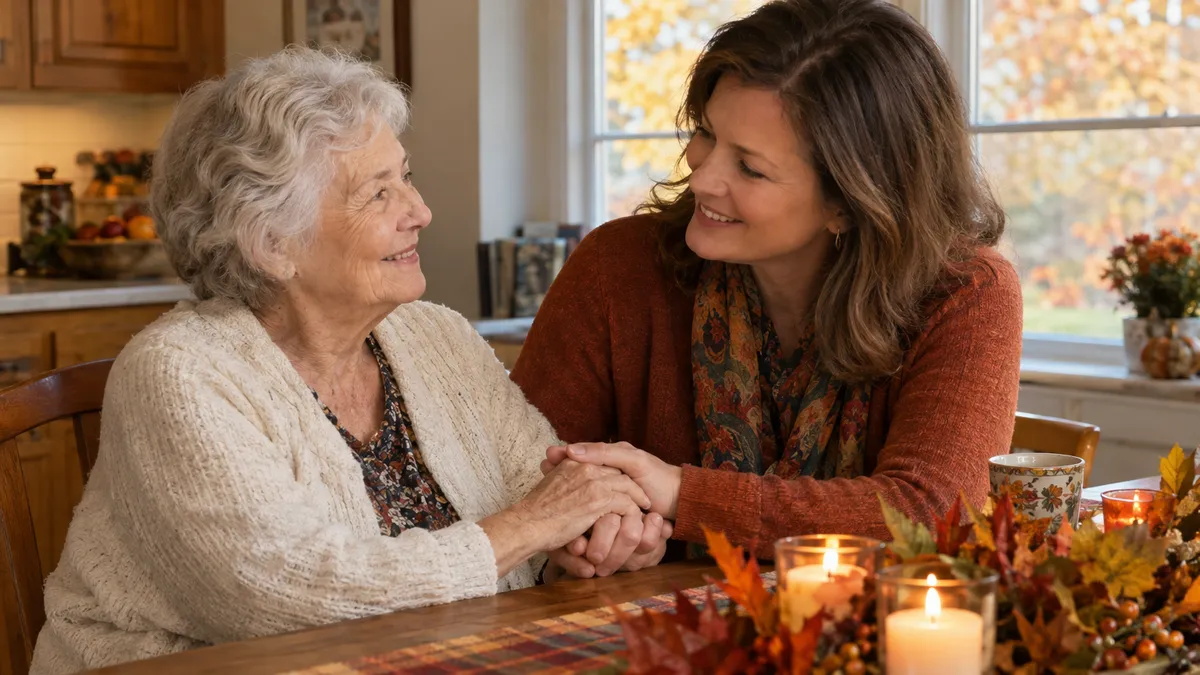
The holidays give many of us something we don't have the rest of the year — time. A few days, or maybe a long weekend, back in the house where you grew up, sitting across the table from your mom or dad. It's easy to get swept up in the warmth of it. The food, the old stories, the familiar routines.
But if you're an adult child — whether you live right here in Greenville or you're flying in from out of state — a holiday visit is also one of the most important check-ins you'll have all year. You're seeing your parent with fresh eyes. You're noticing things that neighbors, or even your parent themselves, may have stopped seeing.
This guide is designed to help you know what to look for, how to start a gentle conversation, and what your next steps might be if something doesn't feel right. Because noticing early is an act of love — not an intrusion.
Why Holiday Visits Are a Natural Care Check-In
If you see your parent every day, change is nearly invisible. It sneaks in gradually — the fridge a little more bare, the mail stacking up a little more, the shuffle a little slower. But when you've been away for months and walk through the front door, the contrast can be striking.
According to the Alzheimer's Association 2024 Facts & Figures, 83% of help provided to older U.S. adults comes from family members, friends, and other unpaid caregivers. That means families like yours are already the first line of support — you're just not always sure what to look for.
A holiday visit is not a surprise inspection. It's a loving, attentive presence. Approach it that way, and the observations will come naturally.
10 Things to Look For When You Arrive
You don't need to walk in with a clipboard. Just stay present, look around, and notice. Here are ten areas that often reveal the most:
1. The Condition of the Home
Is the home roughly as tidy as it used to be? A little clutter is normal. But piled-up dishes, overflowing trash, laundry left in random places, or general disorganization that's out of character may signal that keeping up with housekeeping has become genuinely difficult — not just low-priority.
Also check the walkways. Clear paths between furniture, no throw rugs that could catch a foot, adequate lighting in hallways — these are the basics of fall prevention. Falls are a leading cause of injury in older adults, and a cluttered or poorly lit home increases the risk significantly.
2. The Refrigerator and Kitchen
Take a quiet look at what's in the fridge and pantry. Expired food, very little variety, or evidence that meals have been skipped (an unwashed single cup for the third meal in a row) can tell you a lot. Older adults living alone are at elevated risk for poor nutrition, especially when cooking becomes physically tiring or when depression dulls the appetite.
3. Their Weight and Physical Appearance
Have they lost noticeable weight since the last time you saw them? Do their clothes fit differently? Unintentional weight loss, pale or dry skin, or signs that grooming has slipped — hair unwashed more often, nails untrimmed, wearing the same outfit repeatedly — can all signal that daily self-care is becoming harder to manage.
4. How They Move Around the House
Watch how your parent walks from room to room. Are they steadier than before, or do they reach for walls and furniture for balance? Do they seem hesitant on stairs? Do they complain of dizziness or pain? Mobility changes are important to notice — and worth mentioning to their doctor.
5. Medication Management
Ask if you can peek at their medications. Are pill bottles organized, or scattered? Is a pill organizer being used consistently, or are there several days of doses left in last week's compartments? Missing doses — or accidentally doubling up — is one of the more common and serious challenges for older adults living alone. Important note: a non-medical caregiver's job is medication reminders and pill-organizer support, not administering medication — that's a clinical role.
6. Mail, Bills, and Financial Papers
A stack of unopened mail, past-due notices on the counter, or confusion about whether a bill was paid can indicate that managing finances and paperwork has become overwhelming. This is often an early and under-noticed sign that someone needs more support.
7. Mood and Engagement
Is your parent glad to see you — really glad? Or do they seem flat, withdrawn, or unusually tearful? Isolation and loneliness are serious health risks for older adults, and the holidays can actually deepen that loneliness, not ease it, for seniors who feel like a burden or who have lost friends and a spouse in recent years.
Notice, too, if they seem anxious or irritable in ways that feel different from their personality. These shifts in mood and affect are worth paying attention to and mentioning to their doctor.
8. Memory and Orientation
Forgetting where they put the remote is different from forgetting what day it is, or telling you the same story three times in an hour. Some forgetfulness is a normal part of aging. But noticeable changes in short-term memory, confusion about recent events, or difficulty following a conversation are things to take seriously and discuss with their physician.
If you notice signs that concern you, the Alzheimer's Association South Carolina Chapter offers a 24/7 helpline at 800-272-3900 and local support groups through alz.org/sc.
9. Driving and Transportation
Are there new dents or scrapes on the car? Do they seem uncertain when they describe driving routes they've taken for decades? Do they avoid driving at night or avoid the highway? Safe driving depends on vision, reaction time, and cognitive sharpness — all of which can change with age. If you have concerns, it's a conversation worth having gently, and sooner rather than later.
10. How They Describe Their Daily Life
Simply asking "What did you do yesterday?" or "Who have you talked to this week?" can reveal a lot. If your parent struggles to name activities, seems to spend most of their time alone, or mentions that neighbors or friends have been checking in on them out of concern, listen carefully. They may be telling you more than they realize.
How to Have the Conversation Without Starting an Argument
Here is where many family visits hit a wall. You notice something that worries you. You bring it up. Your parent gets defensive — or dismisses it entirely. The holiday turns tense, and you leave feeling helpless.
This is normal. And it's not a failure. Older adults often have very real, very understandable fears attached to these conversations: losing independence, being "put in a home," feeling like a burden to their children. These fears deserve respect, not dismissal.
A few approaches that tend to work better than others:
- Lead with curiosity, not alarm. "I noticed the kitchen looked a little different — how have meals been going?" opens a door. "I'm worried about you" can feel like a verdict.
- Focus on your feelings, not their failures. "I find myself thinking about you a lot when I'm back home" is softer than "You can't keep this up."
- Talk about options, not decisions. Framing help as something to explore — not something being imposed — keeps the conversation collaborative. "I'd love to find something that makes your week a little easier" lands differently than "You need someone to come in."
- Let them lead where they can. Autonomy matters enormously. Atul Gawande, in Being Mortal, writes compellingly about how quality of life for older adults often depends less on safety and more on agency — on being the author of their own life. Home care, done well, supports that.
When What You Notice Is More Than a "Mom Thing"
Sometimes the visit reveals something that can't wait until next holiday. Weight loss that's severe. A fall they didn't mention on the phone. A medication mix-up that had consequences. Signs of cognitive change that feel significant.
If that's where you are, here are your immediate next steps:
- Contact their primary care physician. Many doctors now offer brief cognitive screenings. If your parent is willing, scheduling an appointment soon after the holidays is a practical, non-escalating first step.
- Look into non-medical home care. In-home care doesn't mean giving up independence — it often means preserving it. A caregiver who comes a few hours a week for meals, medication reminders, light housekeeping, and companionship can change everything for a senior who is struggling quietly at home.
- Call a home care agency to ask questions — not commit. There's no obligation in a conversation. A good agency will help you understand what's available and what might fit.
How Enlightened Home Care Helps Upstate Families
At Enlightened Home Care, we hear from families most often after a holiday visit — when someone flew in, saw what things really looked like, and knew it was time to make a call.
We offer ten non-medical services for seniors and adults in Simpsonville, Greenville, Spartanburg, and surrounding Upstate communities, including Companionship & Sitter care, Meal Planning & Preparation, Medication Reminders, Light Housekeeping, Transportation & Errands, and Personal Care & Daily Living.
Our process is simple: a free discovery call and in-home assessment, a personalized care plan, and a carefully matched caregiver — often within 24 to 48 hours of that first conversation. Caregivers are background-checked, continuously trained, and paired by personality and schedule so your loved one works with someone consistent and familiar.
We serve families on private pay, and we also work alongside SC Medicaid CLTC and other funding programs — something most Upstate agencies don't offer. If you're not sure how your family would pay for care, just ask us. We'll help you understand what options may be available.
Frequently Asked Questions
What are the most important warning signs to look for when visiting aging parents?
The most telling signs include unexplained weight loss, a home that's noticeably less kept than before, difficulty managing medications, confusion or memory lapses, withdrawal from people and activities, and changes in mobility or stability. Any of these, especially in combination, are worth a conversation with their doctor and potentially a home care evaluation.
How do I bring up the idea of home care without upsetting my parent?
Lead with curiosity and compassion rather than alarm. Focus on making their daily life easier and more enjoyable — not on what they can no longer do. Frame in-home care as support, not surveillance. Many families find it helpful to start small: a few hours a week of companionship or meal help, which often builds comfort and trust over time.
Does Enlightened Home Care serve families across Upstate South Carolina?
Yes. We're based in Simpsonville and serve Greenville, Spartanburg, Anderson, Greer, Mauldin, Taylors, Fountain Inn, Boiling Springs, Woodruff, and surrounding Upstate communities. Care often begins within 24 to 48 hours of our first call.
What if my parent lives alone and I'm out of state?
Long-distance caregiving is one of the most stressful situations a family member can be in. A professional in-home caregiver becomes your eyes, your hands, and your peace of mind. We provide family communication and a single point of contact so you always know how your loved one is doing — without having to wonder.
Your Holiday Visit Is Already a Gift — Let It Be More
You're already showing up. That matters more than you know. And if this visit leaves you with a nagging feeling — a sense that things are changing faster than you expected — trust that instinct.
Noticing early means options. It means a conversation while things are still calm, a care plan before a crisis forces one, and a loved one who gets to stay in their own home — with their dignity and independence intact — because someone who loved them paid attention.
If you'd like to talk through what you noticed on your visit, we're here. Book a free, no-obligation discovery call with Enlightened Home Care, or call us directly at (864) 707-8176. There's no pressure and no commitment — just a real conversation about how we can help.
This article is for general information and isn't medical advice. Talk with your loved one's doctor about any health concerns you observe during your visit.
