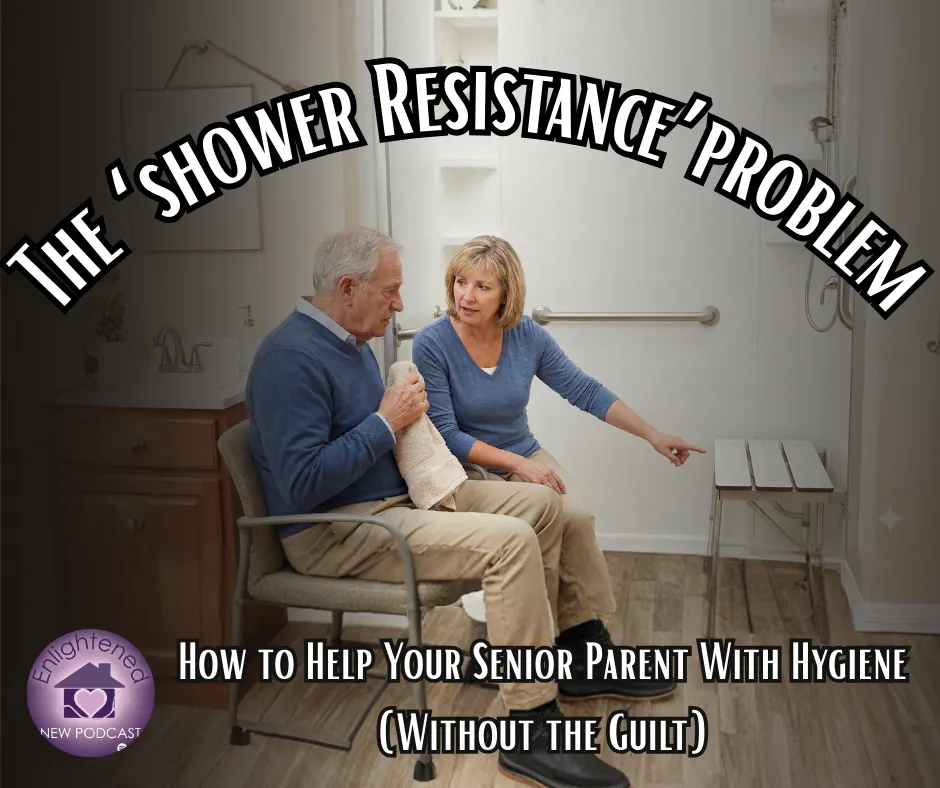
The ‘Shower Resistance’ Problem: How to Help Your Senior Parent With Hygiene (Without the Guilt)

The 'Shower Resistance' Problem: How to Help Your Senior Parent With Hygiene (Without the Guilt)
Your parent refuses to shower. You're frustrated, they're defensive, and every conversation about basic hygiene ends in tears or anger. If this sounds familiar, you're not alone—and more importantly, you're not failing as a caregiver.
Shower resistance is one of the most common and emotionally charged challenges families face when caring for aging parents. It's also one of the most misunderstood. What looks like stubbornness is usually something much deeper: fear, loss of dignity, or even a medical issue that hasn't been identified yet.
Let's break down what's really happening—and what actually works.
Why Smart, Capable People Suddenly "Refuse" to Bathe
Before you assume your parent is being difficult, consider what bathing actually requires. It's not just about getting clean. It demands:
Balance and coordination (stepping over a tub ledge, standing on a slippery surface)
Temperature regulation (older adults lose the ability to sense water temperature accurately)
Cognitive sequencing (remembering the steps: undress, adjust water, wash, rinse, dry, dress)
Physical vulnerability (being naked, wet, and unable to quickly respond to danger)
When your parent says "I already showered" or "I don't need one," they're often protecting themselves from something that has become genuinely frightening or overwhelming.
The Hidden Medical Reasons Behind Resistance
According to Teepa Snow, one of the nation's leading dementia care experts, what we interpret as refusal is often the brain's way of saying "I can't do this safely anymore." Her Positive Approach to Care (PAC) framework teaches us to look beyond behavior to the underlying cause.
Common medical factors include:
Dementia-related changes: Early-stage cognitive decline affects executive function—the ability to plan and execute multi-step tasks. Your parent may not remember how to shower, even if they could tell you the steps out loud.
Sensory sensitivity: Aging skin becomes thinner and more sensitive. What feels like a normal shower spray to you might feel like needles to them. The sound of rushing water can be disorienting, especially for those with dementia.
Fear of falling: If your parent has fallen before—or witnessed a friend fall in the bathroom—that trauma doesn't disappear. Every shower becomes a risk assessment.
Depression and apathy: In Upstate SC's aging community, isolation and depression are significant factors. When someone stops caring about their appearance, it's often a red flag for deeper emotional struggles.
Urinary incontinence: Many seniors avoid bathing because they're worried about accidents. The vulnerability of being undressed amplifies this anxiety.
Communication Strategies That Preserve Dignity
The worst thing you can do is approach hygiene like a battle to be won. Occupational therapist Teepa Snow's techniques emphasize partnership over power struggles.
What NOT to Say:
"You haven't showered in days—you smell."
"Do you want me to come over there and do it myself?"
"What's wrong with you? You used to care about this."
These statements trigger shame, which shuts down cooperation immediately.
What DOES Work:
Use "hand-under-hand" guidance: Instead of taking over, place your hand under theirs and let them lead the motion. This preserves agency while providing support.
Reframe the conversation: Don't mention hygiene directly. Try: "I'm heading to an appointment later—want to get ready with me?" or "Let's get freshened up before lunch."
Focus on comfort, not cleanliness: "Would a warm shower feel good right now?" is less confrontational than "You need to bathe."
Break it into steps: Don't say "take a shower." Say "Let's get your clothes ready" (step one). Then "Let's turn on the water" (step two). Dementia expert Nancy Mace, co-author of The 36-Hour Day, calls this "bridging"—giving the brain one manageable task at a time.
Offer choices: "Would you rather shower now or after breakfast?" This creates the illusion of control while ensuring the task gets done.
Environmental Modifications: Making Bathrooms Actually Safe
If your parent is resisting the shower because it feels dangerous, they're probably right. Here's what Upstate SC families should consider:
Immediate, Low-Cost Changes:
Non-slip mats inside and outside the tub (the rubber kind, not suction cups)
Handheld showerhead (allows them to sit while bathing)
Shower chair or bench (eliminates the need to stand)
Brighter lighting (aging eyes need 3x more light than young eyes)
Remove glass doors (replace with a shower curtain to reduce fall risk)
Larger Modifications (Worth the Investment):
Walk-in tub or curbless shower (eliminates the biggest fall hazard)
Grab bars installed by a professional (not towel racks—they rip out of drywall)
Temperature-controlled faucets (prevents scalding)
Local Upstate SC resources like Greenville's Area Agency on Aging can sometimes provide grants or low-interest loans for accessibility modifications. If your parent is a veteran, the VA also offers Home Improvement and Structural Alteration (HISA) grants.
When It's Time to Bring in Professional Help
There comes a point when family caregivers need backup—not because you're failing, but because some tasks are simply easier for a neutral third party.
Professional in-home caregivers are trained in techniques like Teepa Snow's PAC methods. They know how to:
Approach bathing as a routine task, not an emotional battleground
Recognize early signs of distress and adapt their approach
Maintain dignity while providing hands-on assistance
Spot skin issues, bruising, or other health concerns
Here in the Upstate, agencies like Enlightened Home Care (based in Simpsonville) specialize in non-medical support that includes personal care assistance. The difference between a family member and a trained caregiver? The caregiver doesn't carry the emotional history. Your parent may resist you while accepting help from someone who feels less like a role reversal.
Signs It's Time to Call for Help:
Your parent hasn't bathed in over a week
You're noticing skin infections, rashes, or odor
Bathing attempts are causing physical or emotional harm to either of you
Your relationship is suffering because of these conflicts
The Bigger Picture: Hygiene as a Window Into Overall Health
Shower resistance is rarely just about showers. It's often the first visible sign of:
Cognitive decline that needs medical evaluation
Depression or grief that needs mental health support
Physical limitations that need occupational therapy
Geriatrician Louise Aronson, author of Elderhood, reminds us that aging is not a disease to be fixed—it's a life stage that deserves dignity and adaptation. If your parent is struggling with hygiene, the question isn't "How do I force compliance?" It's "What support does my parent need to live well?"
Take the Next Step
If shower resistance has become a daily battle in your household, start here:
Schedule a primary care visit to rule out medical causes (UTI, depression, medication side effects)
Document patterns (When does resistance happen? Is it time-specific? Does it correlate with other behaviors?)
Make one environmental change this week (grab bars, shower chair, better lighting)
Reach out for help before you burn out
You don't have to navigate this alone. Whether it's connecting with resources through the Aging Life Care Association, reaching out to local Upstate SC support groups, or bringing in professional care assistance, there are people who understand exactly what you're going through.
For families in Simpsonville, Greenville, and the surrounding Upstate SC area, Enlightened Home Care offers compassionate, trained caregivers who specialize in exactly these kinds of daily living challenges. Sometimes the best gift you can give your parent—and yourself—is permission to accept help.
Need guidance on in-home care options or want to talk through your specific situation? Contact Enlightened Home Care at (864) 707-8176 or visit www.enlightenedhomecare.com.
